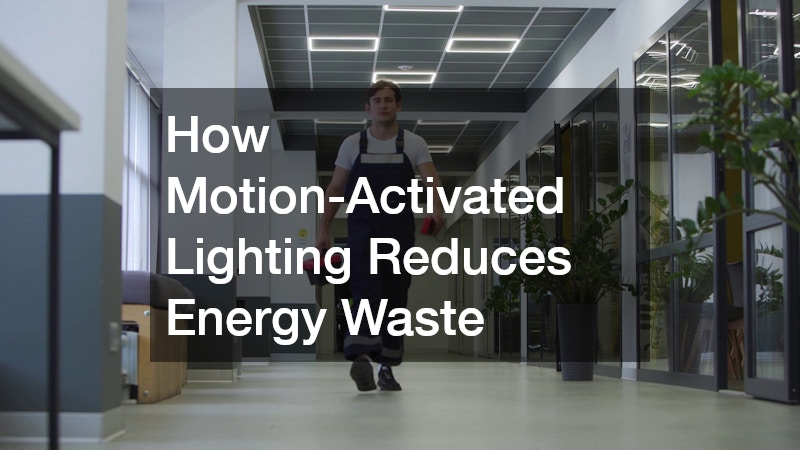
Energy efficiency has become a major priority for businesses, property owners, and homeowners looking to reduce utility costs and minimize environmental impact. One of the simplest yet most effective solutions is motion-activated lighting. These systems automatically turn lights on when movement is detected and switch them off when spaces are unoccupied. As more buildings adopt smart technology and energy-conscious practices, motion-activated systems are becoming a valuable upgrade for both residential and commercial lighting applications. By reducing unnecessary electricity use, these systems help create more efficient and cost-effective environments.
Video Source
Motion-activated lighting relies on sensors that detect movement within a designated area. When motion is detected, the system immediately turns on connected lights. After a set period of inactivity, the lights automatically switch off.
Most systems use either passive infrared sensors, ultrasonic sensors, or a combination of both. Passive infrared sensors detect body heat and movement, while ultrasonic sensors use sound waves to identify activity in a room. These technologies allow lighting systems to respond quickly and efficiently without requiring manual operation.
Motion-activated fixtures can be installed in hallways, bathrooms, garages, parking lots, warehouses, offices, and outdoor spaces. Because they operate only when needed, they help reduce the amount of wasted electricity caused by lights being left on unnecessarily.
One of the biggest causes of wasted electricity is lights remaining on in empty rooms or unused spaces. In busy environments, people often forget to turn lights off when leaving an area. Over time, this unnecessary usage can significantly increase energy costs.
Motion-activated lighting solves this problem by automating the process. Lights turn off automatically when no movement is detected, ensuring electricity is not wasted in vacant areas. This feature is especially useful in locations where occupancy changes frequently, such as conference rooms, storage areas, restrooms, and break rooms.
Even in residential settings, homeowners can benefit from reduced energy consumption. Closets, laundry rooms, basements, and outdoor pathways are common places where lights are often accidentally left on. Automated systems remove the need to rely on memory or habit.
Reducing energy waste directly impacts monthly utility expenses. Motion-activated systems decrease the amount of time lights remain active, lowering overall electricity usage without sacrificing visibility or convenience.
Because lighting represents a significant portion of commercial energy use, even small reductions can add up over time. Motion-activated systems help property owners achieve greater efficiency while maintaining comfortable and functional spaces for employees, customers, and visitors.
Another important advantage of motion-activated lighting is reduced wear on bulbs and fixtures. Traditional lighting systems that remain on for long periods experience more rapid burnout and degradation.
By limiting operation only to times when lighting is needed, motion-activated systems help extend bulb lifespan. This can reduce maintenance costs and decrease the frequency of replacements, especially in large buildings where maintaining lighting systems may require significant labor.
LED lighting combined with motion sensors creates an even more energy-efficient solution. LEDs already consume less electricity and last longer than traditional bulbs, and pairing them with automated controls maximizes those benefits.
In addition to reducing energy waste, motion-activated lighting enhances safety and security. Outdoor motion-activated lights illuminate pathways, entrances, and parking areas only when movement occurs. This provides visibility when needed while conserving electricity during inactive periods.
Inside buildings, automated lighting can also reduce the risk of accidents. Employees or residents entering dark hallways, stairwells, or storage rooms immediately gain visibility without needing to locate a switch. This added convenience contributes to safer environments for everyone.
Many organizations are actively working to reduce their environmental impact and meet sustainability objectives. Motion-activated lighting supports these efforts by lowering overall energy consumption and reducing unnecessary strain on power resources.
Motion-activated lighting offers a simple yet highly effective way to reduce energy waste while improving convenience, safety, and efficiency. By ensuring lights operate only when needed, these systems help lower utility costs, extend bulb lifespan, and support sustainability efforts.
Whether used in residential properties, offices, warehouses, or outdoor spaces, motion-activated lighting provides long-term benefits for property owners looking to reduce unnecessary energy consumption. As energy efficiency becomes increasingly important, automated lighting solutions continue to play a valuable role in smarter and more sustainable building management.