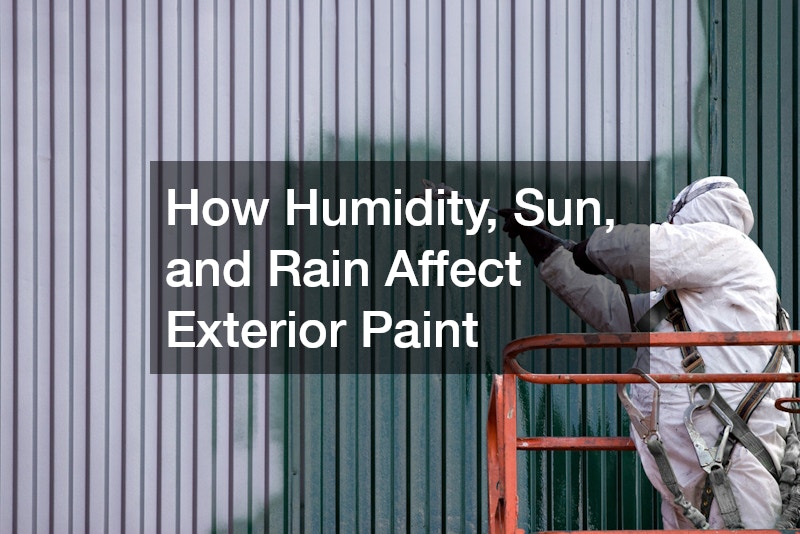
Protecting a home’s exterior finish is about more than choosing an appealing color—it’s about understanding how environmental conditions impact durability over time. Weather plays a major role in how long paint lasts and how well it continues to protect surfaces. That’s why many homeowners rely on professional exterior painting services to ensure proper preparation, application, and long-term performance.
Humidity, sunlight, and rain each affect exterior paint in different ways. When combined, they can significantly accelerate wear if the wrong materials or techniques are used.
Video Source
Humidity refers to the amount of moisture in the air, and it has a direct impact on how paint dries and cures. When humidity levels are high, water in the air slows down the evaporation process. This can lead to several issues:
One of the most common problems is extended drying time. Paint that takes too long to dry remains vulnerable to dust, debris, and insects, which can become trapped in the finish. High humidity can also cause bubbling or blistering, especially if moisture becomes trapped beneath the surface.
In extreme cases, paint may fail to properly adhere to the surface at all. This is particularly common in regions with frequent afternoon storms or consistently muggy climates. Over time, these conditions can lead to peeling and premature deterioration.
On the other hand, extremely low humidity can also be problematic. Paint may dry too quickly, preventing it from bonding properly to the surface and leading to cracking or uneven texture.
Sunlight is one of the most damaging long-term factors for exterior paint. Ultraviolet (UV) rays gradually break down the chemical bonds in paint, causing it to fade, chalk, and lose its protective qualities.
Fading is often the first noticeable sign of sun damage. Bright or dark colors tend to lose their vibrancy more quickly, especially on surfaces that receive direct sunlight for most of the day. Over time, UV exposure also causes paint to become brittle, making it more susceptible to cracking.
Heat from the sun expands building materials such as wood and siding. As temperatures drop at night, these materials contract again. This constant expansion and contraction places stress on the paint layer, eventually causing it to split or peel.
South- and west-facing walls are usually the most affected because they receive the strongest and longest periods of sunlight. Without proper preparation and UV-resistant coatings, these areas often require more frequent maintenance.
Rain is another major factor that influences exterior paint performance. While modern paints are designed to be water-resistant, constant exposure to moisture can still lead to long-term damage.
If paint is not fully cured before rainfall, water can wash away portions of the coating or leave visible streaks. This is why timing and weather forecasting are critical during exterior painting projects.
Once cured, paint acts as a protective barrier, but repeated wetting and drying cycles can still cause issues. Moisture can seep into small cracks or unsealed areas, eventually reaching the underlying material. This can lead to wood rot, mold growth, or structural weakening beneath the paint layer.
In climates with frequent storms or heavy seasonal rain, surfaces often experience faster wear. Gutters, trim, and lower wall sections are especially vulnerable because they are exposed to runoff and splashing water.
While each weather condition alone can affect paint, the real challenge comes from their combined impact. A surface may expand in the heat, absorb moisture during rain, and then dry rapidly under strong sunlight—all within a short period.
This cycle of stress causes paint to lose elasticity over time. Once flexibility is reduced, the coating becomes more prone to cracking, peeling, and flaking. The result is not only cosmetic damage but also reduced protection for the underlying surface.
Homes in coastal or subtropical regions often experience the most rapid paint deterioration due to constant exposure to all three elements.
Color choice can also influence durability. Lighter shades tend to reflect sunlight better than darker colors, reducing heat absorption and fading over time. Humidity, sunlight, and rain each play a significant role in the lifespan of exterior paint. Understanding how these elements interact helps homeowners make better decisions about materials, timing, and maintenance. With proper preparation, high-quality products, and attention to environmental conditions, exterior surfaces can maintain their appearance and protection for years despite challenging weather conditions.