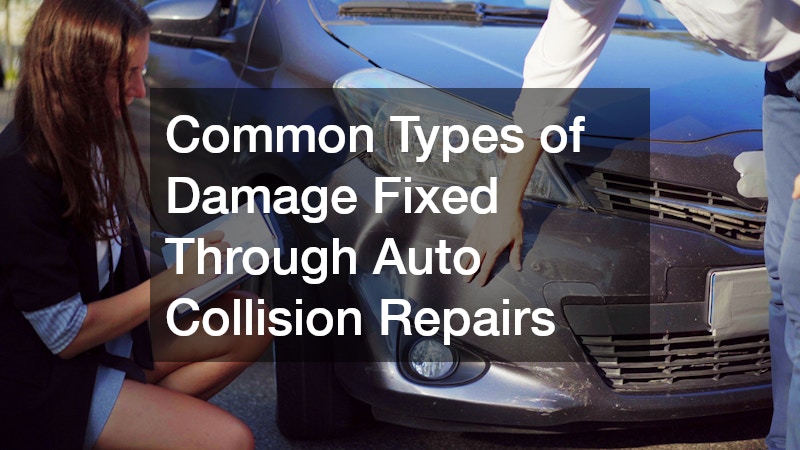
A vehicle accident can leave behind damage that ranges from obvious cosmetic issues to hidden structural problems. Even low-speed collisions can affect multiple parts of a vehicle, impacting not only appearance but also safety, performance, and long-term reliability. After an accident, understanding the types of damage that may need professional attention can help drivers make informed decisions about repairs and restoration.
Modern vehicles are built with advanced safety systems and carefully engineered structures, which means collision damage often extends beyond what is visible on the surface. Professional auto collision repairs are designed to identify, assess, and restore both visible and underlying damage so a vehicle can safely return to the road.
One of the most common forms of collision damage involves dents, creases, and damaged body panels. Fenders, doors, quarter panels, and bumpers often absorb impact during an accident, leaving behind visible distortion.
Video Source
In some cases, the damage is limited to minor dents, while more severe collisions may cause panels to bend or crumple significantly.
Damaged body panels can affect more than aesthetics. Misaligned panels may interfere with doors closing properly, reduce aerodynamics, or create gaps that allow moisture and debris into vulnerable areas. Repair technicians often reshape or replace damaged panels to restore both appearance and function.
Paint damage is another common issue after a collision. Scratches, scuffs, chips, and peeling paint frequently occur when surfaces scrape against another vehicle, barrier, or object. Even seemingly minor paint damage can become a larger problem if left untreated.
Exposed metal surfaces are more vulnerable to corrosion, especially in regions with moisture, snow, or road salt. Professional refinishing helps restore protective coatings while matching the vehicle’s original color and finish. Modern paint-matching technology allows repairs to blend seamlessly with surrounding surfaces, helping preserve a vehicle’s appearance and value.
Bumpers are specifically designed to absorb impact energy, making them one of the most frequently damaged components in collisions. Front and rear bumpers often suffer cracks, dents, punctures, or complete detachment depending on the severity of the accident.
Although bumpers may appear to have only cosmetic damage, internal reinforcement components may also be affected. These hidden structural elements help manage impact forces during future collisions. Proper repair or replacement ensures the bumper continues performing as intended in protecting the vehicle and its occupants.
Headlights, taillights, turn signals, and fog lights are highly vulnerable during collisions. Cracked housings, shattered lenses, and broken mounting brackets are common after impact. Damaged lighting affects visibility and can reduce safety during nighttime driving or poor weather conditions.
Repairing or replacing damaged lighting components helps restore full functionality. It also ensures compliance with road safety regulations, since broken or dim lights can create hazards for both the driver and others on the road.
Some of the most serious collision damage affects the vehicle’s frame or structural components. Even if exterior damage appears limited, the underlying structure may have shifted during impact. Frame misalignment can alter how the vehicle handles, brakes, and responds during future accidents.
Structural repairs often involve specialized equipment that measures alignment and restores components to manufacturer specifications. Because the frame serves as the foundation of the vehicle, proper restoration is critical for maintaining safety and performance.
Collisions can affect suspension components such as control arms, struts, shocks, and steering systems. Even hitting a curb or pothole during an accident can throw alignment off or damage components responsible for ride stability.
Drivers may notice signs such as uneven tire wear, pulling to one side, vibrations, or poor steering response. Addressing these issues helps improve handling, ride comfort, and tire longevity. Repairs in this area often play a major role in restoring normal driving performance.
Collision impacts frequently crack or shatter glass surfaces, including windshields, side windows, and rear glass. Even small chips in a windshield can spread over time due to temperature changes, vibration, or road stress.
Damaged glass reduces visibility and can compromise structural integrity, especially since the windshield contributes to overall cabin support. Replacing broken or compromised glass helps restore visibility and occupant protection.
Not all collision-related issues are immediately visible. Impacts can damage internal systems such as radiators, cooling lines, sensors, electrical wiring, and engine components. These hidden problems may not appear until days or weeks after the accident.
This is why thorough inspections matter. Professional auto collision repairs often include detailed evaluations that uncover damage not visible during a quick visual assessment. Identifying these issues early helps prevent future breakdowns and more expensive repairs.
Collision damage comes in many forms, from surface scratches to major structural issues. What may look minor at first glance can sometimes conceal deeper mechanical or safety-related problems. Prompt professional assessment ensures all damage is identified and repaired correctly.
By addressing collision damage thoroughly, drivers can restore vehicle safety, improve performance, and maintain long-term value. Whether the issue is cosmetic, structural, or mechanical, proper repair helps return a vehicle to reliable road-ready condition.