Understanding what to inquire about when hiring an electrical contractor is vital for ensuring the quality, legality, and safety of your project. Whether you are managing a residential home remodel or overseeing a complex commercial build, vetting your service provider protects your financial investment. Navigating the hiring process requires an organized strategy.
Video Source
Evaluating an electrical contractor begins with gauging their specific experience relative to your project's unique scope. Electrical work varies drastically across residential, commercial, and industrial settings.
Verify Scope Familiarity: Ensure the contractor is adept at navigating the specific architectural demands of your undertaking. A technician who excels at residential smart-home wiring may lack the tools or structural knowledge required for commercial three-phase power distribution.
Analyze Industry Longevity: The number of years a firm has operated in the local market serves as a testament to its reliability. Established companies typically possess resilient vendor relationships and stable processes, making them highly adept at managing unforeseen structural bottlenecks.
Request Direct References: Tangible examples of past work quality offer authentic insight into a team's day-to-day execution. Ask for reference projects completed within the past year. Speaking directly with past clients reveals deeper insights into the contractor's communicative habits and problem-solving approaches.
It is imperative to verify that your electrical contractor holds active, valid credentials for operating in your specific region. Electrical failure is a leading cause of property fires, making legal compliance non-negotiable.
First, confirm that the contractor holds a current state master electrician license. This certification guarantees that the provider has met rigorous educational, field-hour, and testing requirements. Unlicensed electrical work can violate local building codes, leaving you vulnerable to severe municipal fines or complications during future property sales.
Additionally, protect your property from liability by demanding proof of comprehensive insurance coverage. A reputable contractor must carry substantial general liability insurance to cover accidental property damage, alongside active workers' compensation insurance to shield you from financial burdens if a technician is injured on your job site.
An open dialogue about project financials prevents misunderstandings and sets a transparent baseline for your construction budget.
Demand Itemized Estimates: Avoid contractors who offer a single lump-sum verbal quote. A professional proposal must break down exact costs for raw materials, specialized fixtures, labor hours, municipal permit fees, and disposal costs.
Establish Clear Payment Milestones: Avoid paying the entire project balance upfront. Implement a structured milestone plan where partial payments are released incrementally based on completed deliverables (such as rough-in completion, panel upgrade, and final trim-out inspection).
Address Hidden Costs and Change Orders: Clarify how the contractor handles unexpected developments, such as discovering outdated knob-and-tube wiring behind old plaster walls. Ensure the contract explicitly dictates the change-order process, outlining how additions are documented and approved in writing before work proceeds.
Electrical contracting carries inherent field hazards, necessitating systematic, daily safety protocols to protect both the workforce and your property.
Inquire about the company's internal safety programs. A premier electrical firm enforces rigorous equipment handling rules, mandates the use of personal protective equipment (PPE), and conducts regular site safety audits. Continuous staff training ensures that field technicians remain proficient in modern diagnostic methods and OSHA regulations.
Furthermore, ask about their emergency preparedness strategies. A responsible contractor maintains a robust plan detailing immediate actions, resource allocations, and communication channels for accidental injuries or equipment malfunctions. This foresight reflects proactive risk management and builds total project confidence.
Requesting a detailed project timeline helps align your scheduling needs and coordinates overlapping trades on busy job sites.
A comprehensive timeline acts as a roadmap, detailing resource allocation across every phase from initial layout to final inspection. However, supply chain bottlenecks or extreme weather can disrupt schedules. Discuss upfront how the contractor handles potential delays, asking about their contingency plans for material shortages.
Finally, evaluate their baseline communication practices. Regular, routine updates regarding project progress or minor adjustments keep all stakeholders informed. Contractors who prioritize transparent dialogue establish a cooperative work dynamic that fosters trust and guarantees client contentment.
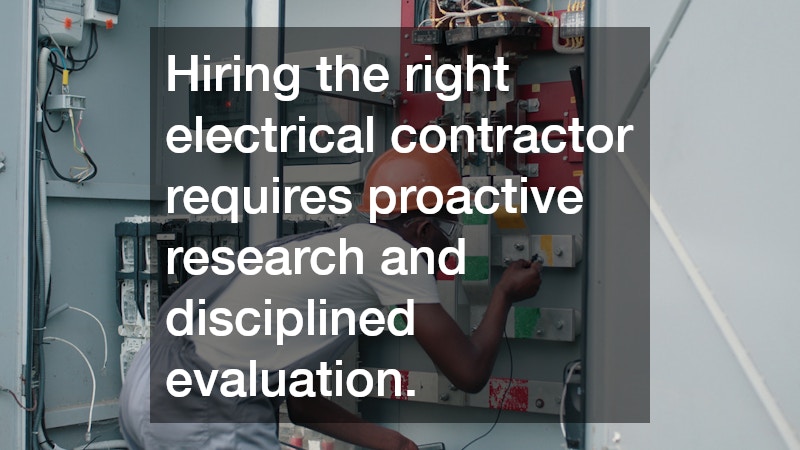
Hiring the right electrical contractor requires proactive research and disciplined evaluation. By systematically asking these targeted questions regarding industry experience, licensing compliance, itemized pricing, site safety, and schedule management, you eliminate guesswork from the selection process. Taking the time to thoroughly vet your contractor safeguards your infrastructure, protects your budget, and ensures a safe, efficient, and successful project outcome.