Installing a new fence is a significant property investment that defines your boundaries, heightens security, and drastically elevates curb appeal. However, the private contracting market can be highly variable. To avoid structural delays, low-grade wood warping, and unexpected financial disputes, you must act as a disciplined project manager before signing on the dotted line.
Never assume a contractor is automatically qualified or legally compliant just because they have a professional-looking truck or website.
Verify Active Licensing and Insurance: Ask for physical copies of their current state contractor license and comprehensive liability insurance policy. Additionally, verify they carry active workers' compensation insurance.
Video Source
If an uninsured field worker suffers an injury on your property, you could be held financially liable for their medical expenses.
Request Scope-Specific Portfolio Projects: Ask to see recent project galleries from the fence contractor that match your exact backyard terrain and chosen material. A crew that excels at installing pre-fabricated vinyl panels on a perfectly flat lot may struggle significantly when dealing with custom cedar stick-building over highly sloped or rocky soil.
Demand Recent, Verifiable Local References: Request the contact information of at least three clients who had fences installed within the past year. Ask these references detailed questions about the crew's daily punctuality, structural cleanup habits, and overall communication when unexpected bottlenecks emerged.
Fencing materials are not created equal, and vague contract descriptions can leave room for contractors to substitute high-grade timber with cheap, warp-prone alternatives.
Inquire About Wood Species and Treatments: If you are building a classic wood privacy fence, ask exactly what species is being quoted. Demand premium Western Red Cedar or dense, pressure-treated pine. Ensure they utilize thick, premium pickets rather than paper-thin, low-grade fencing blanks that will buckle, twist, and split within two winters.
Verify Post and Fastener Specifications: The ultimate lifespan of your fence depends entirely on what sits below the dirt line. Confirm that the contractor sets posts deep beneath your local frost line using solid concrete footings. Furthermore, demand the exclusive use of hot-dipped galvanized or stainless steel screws. Cheap nails will quickly corrode, leaving ugly black rust streaks bleeding down your clean panels.
Clarify Vinyl and Metal Thickness: If choosing modern vinyl or ornamental aluminum, ask about the specific wall thickness and manufacturer warranties. Low-tier vinyl panels easily become brittle in extreme winter freezes, cracking instantly under minor backyard impacts.
Understanding the precise chronology of your fence build keeps your household organized and prevents your yard from being left wide open for weeks on end.
Ask for a firm, itemized schedule detailing exactly when site preparation, utility marking, post-hole digging, and panel assembly will unfold. A standard residential fence installation typically spans two to four days, but weather delays can happen.
A transparent, itemized cost breakdown forms the financial framework of your project and prevents unexpected budget overruns.
Demand a Comprehensive, Fixed-Price Estimate: Your quote must completely isolate charges for raw materials, localized labor, municipal permit fees, and the physical tear-out and disposal of your old fence.
Establish Balanced Payment Milestones: Never hire a fence contractor who demands a 100% upfront cash payment or an excessively large deposit. A trustworthy financial blueprint utilizes an incremental milestone plan—such as 30% upon signing to secure materials, 40% when posts are successfully set in concrete, and the final 30% balance released only after a complete walkthrough.
Uncover Hidden Site Modification Charges: Ask how they price unforeseen challenges, including land grading, clearing thick tree roots, or navigating difficult property lines. Ensure all potential change orders are agreed upon in writing before the extra work begins.
A fence contract is incomplete without strong, documented safety nets covering both raw material defects and physical construction errors.
Distinguish clearly between the manufacturer's product warranty and the contractor's internal workmanship warranty. While a vinyl manufacturer might guarantee their panels against UV fading for twenty years, that coverage does not protect you if the gate sags or unlevels due to improper post anchoring.
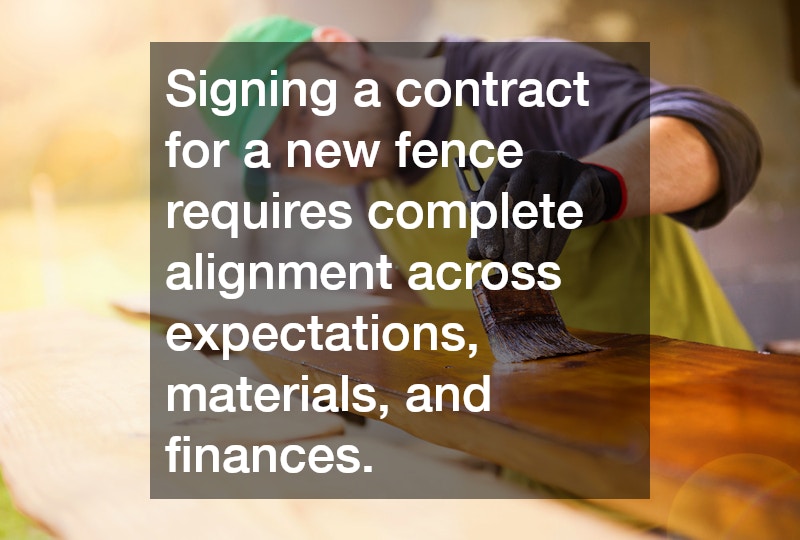
Signing a contract for a new fence requires complete alignment across expectations, materials, and finances. By systematically asking targeted questions regarding credential verification, material grades, scheduling flow, milestone payments, and structural warranties, you eliminate guesswork from the equation. Taking a disciplined, proactive approach ensures you hire a top-tier local contractor who respects your budget, values your time, and delivers a rugged, beautiful boundary wall built to stand for decades.