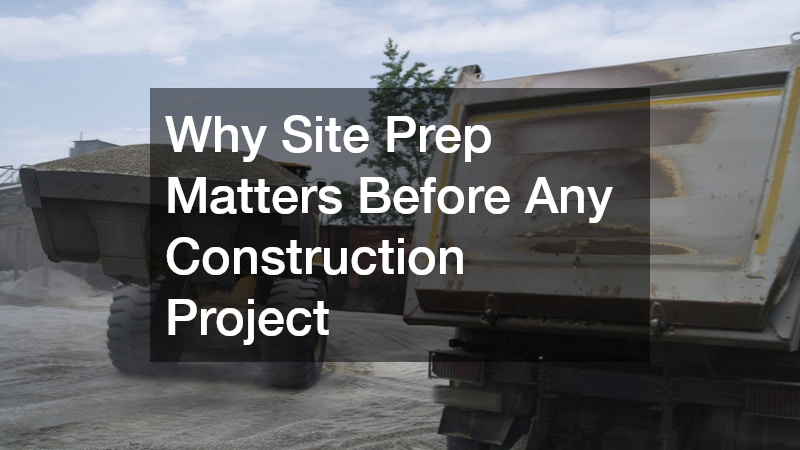
Every successful construction project starts long before concrete is poured or walls begin to rise. The preparation that takes place before building begins often determines how smoothly the entire process will unfold. From clearing debris to grading the land, proper site preparation creates a stable foundation for everything that follows. Whether the project involves a residential home, commercial facility, or outdoor structure, excavating and other site preparation tasks help reduce risks, improve efficiency, and support long-term durability.
Many people focus on the visible stages of construction because those phases showcase progress. However, skipping or rushing through site prep can lead to expensive setbacks later.
Video Source
Investing time and attention in this critical stage helps protect the project's timeline, budget, and structural integrity.
One of the primary reasons site preparation matters is that it establishes the foundation on which the entire structure depends. Soil conditions vary significantly from one location to another. Some sites may contain loose soil, hidden debris, or areas prone to shifting.
Preparing the site allows construction teams to evaluate these conditions and make necessary adjustments. Compacted soil provides better support for foundations and minimizes the chances of settling over time. Proper grading also ensures that the building rests on a stable surface capable of handling the intended load.
Without adequate preparation, foundations may crack, floors can become uneven, and structural issues may develop. Correcting these problems after construction has begun is often much more costly than addressing them beforehand.
Water is one of the biggest threats to any structure. Poor drainage can lead to foundation damage, erosion, mold growth, and landscape deterioration. Site preparation includes evaluating how water naturally moves across the property and implementing measures to direct it away from the building area.
Grading the land correctly helps prevent standing water around foundations. Drainage systems may also be incorporated to manage runoff effectively during storms and periods of heavy rainfall.
By addressing drainage concerns early, property owners can reduce the likelihood of moisture-related problems that could compromise the building's integrity in the future.
Construction sites can contain hidden challenges that are not immediately obvious. Rocks buried beneath the surface, tree roots, unstable soil, and underground utilities all present potential obstacles.
Site preparation gives crews the opportunity to uncover these issues before major construction begins. Utility lines can be located and marked, hazardous materials can be removed, and unsuitable soil conditions can be corrected.
Identifying these concerns in advance helps avoid unexpected delays and improves safety for everyone involved in the project. It also allows contractors to adjust plans proactively rather than reacting to emergencies once work is underway.
A well-prepared site contributes to more accurate planning and scheduling. Contractors can assess the true scope of the project and determine what resources, equipment, and labor will be necessary to complete the work efficiently.
Unexpected conditions discovered after construction starts can disrupt timelines and increase expenses. Additional materials may be required, equipment schedules may shift, and subcontractors may need to reschedule their work.
Thorough site preparation minimizes these surprises. With a clearer understanding of the property's conditions, teams can create realistic timelines and budgets that improve communication and expectations among everyone involved.
Construction projects represent significant financial commitments. Whether someone is building a new home, expanding a business, or adding an accessory structure, protecting that investment is essential.
Proper site preparation supports the longevity of the finished project. Stable foundations, effective drainage, and careful hazard identification all contribute to a structure's long-term performance. Preventing problems before they occur often saves substantial amounts of money on future repairs and maintenance.
Construction success depends on much more than quality materials and skilled craftsmanship. The condition of the site itself plays a major role in determining the outcome of the project. Taking the time to prepare the land properly helps establish a strong foundation, improve drainage, enhance safety, and support efficient planning.
Skipping these steps may seem like a way to save time initially, but the consequences can be costly and disruptive. Thorough site preparation creates the conditions necessary for smooth construction and dependable results.
Before any structure rises from the ground, the work beneath the surface deserves careful attention. A properly prepared site lays the groundwork for a project built to withstand the test of time.