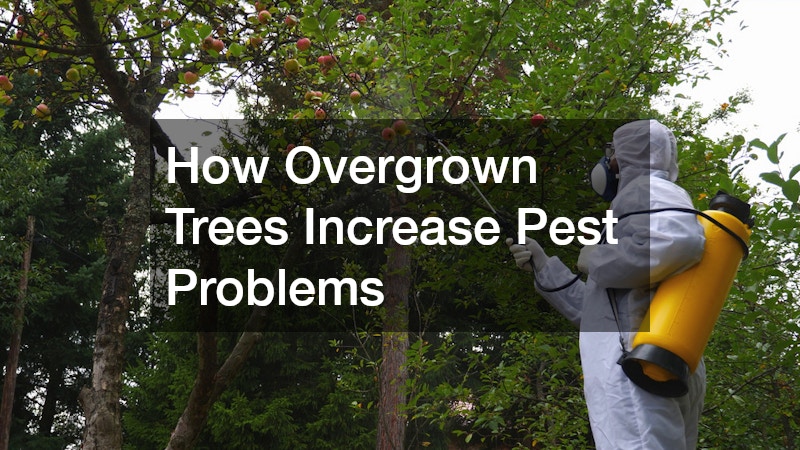
Overgrown trees can create more than an untidy appearance around your property. When branches, leaves, and dense vegetation are left unmanaged, they can provide ideal conditions for insects, rodents, and other pests to thrive. Dense canopies create shade, moisture, and hiding places that make it easier for pests to establish themselves and spread. Regular pruning and professional tree care can help maintain healthier trees while reducing the conditions that attract unwanted pests. Property owners seeking reliable local tree services can benefit from professional assistance with identifying overgrowth and addressing potential pest-related concerns before they become more serious.
Thick branches and excessive foliage give insects and small animals plenty of places to hide. Pests can nest inside dense canopies, beneath overlapping branches, or near areas where vegetation has become difficult to inspect.
Video Source
Because these locations are often hidden from view, infestations may grow before homeowners realize there is a problem.
Overgrown trees can also create sheltered spaces close to roofs, gutters, windows, and exterior walls. Branches that extend toward a home may give insects and rodents easier access to the structure. Regular pruning can improve visibility and remove unnecessary growth that provides cover for pests. Maintaining a balanced canopy makes it easier to spot signs of insect activity, nests, damaged branches, and other concerns.
Overgrown trees often create heavy shade that prevents moisture from evaporating quickly. After rain or watering, areas beneath dense branches may remain damp for extended periods. This combination of shade and moisture can create conditions that attract certain insects and other pests.
Moisture can also collect around decaying branches, dense leaf piles, and areas where vegetation is blocking airflow. These conditions may contribute to wood decay, which can attract insects that feed on weakened or deteriorating plant material. Keeping trees properly trimmed helps improve air circulation and sunlight exposure, reducing the damp conditions that may encourage pest activity.
Trees that are stressed, diseased, or damaged may be more vulnerable to insects that target weakened wood. Overgrowth can make it difficult to identify problems such as dead limbs, cracks, decay, or fungal growth. When these issues are left untreated, the tree may become increasingly attractive to pests.
Dead branches are especially important to address because they can provide food and shelter for various insects. As decaying wood accumulates, pest activity may increase around the tree and potentially spread to other plants or nearby structures. Professional tree maintenance can help identify damaged growth and determine whether pruning, treatment, or removal is appropriate.
Tree branches that grow too close to a home can create a natural pathway for pests. Ants, squirrels, rodents, and other animals may use branches to reach roofs, attics, vents, and other openings. Once pests gain access to a structure, they may create damage, contaminate areas, or become difficult to remove.
Keeping branches trimmed away from buildings can reduce these access points. Proper clearance also helps protect roofs, siding, windows, and gutters from damage caused by constant contact with growing limbs. Routine pruning is an important part of maintaining a safer distance between trees and structures.
Overgrown trees often produce more leaves, twigs, and other organic debris than a property owner can easily manage. When this material accumulates around the base of trees, along fences, or near structures, it can create additional hiding places for pests.
Leaf piles and decaying organic matter may attract insects and provide shelter for small animals. Debris can also block drainage areas, creating additional moisture problems that encourage pest activity. Keeping the area around trees clean and removing excess debris can help make the landscape less appealing to unwanted visitors.
A dense canopy can limit airflow between branches and leaves. Poor circulation may allow moisture to remain trapped within the tree, increasing the risk of conditions that weaken plant health. A stressed tree may then become more vulnerable to insects and other pests.
Strategic pruning can improve airflow without removing healthy growth unnecessarily. A professional can evaluate the structure of the tree and identify branches that are crossing, overcrowded, dead, or poorly positioned. This approach helps promote healthier growth while reducing some of the environmental conditions associated with pest activity.