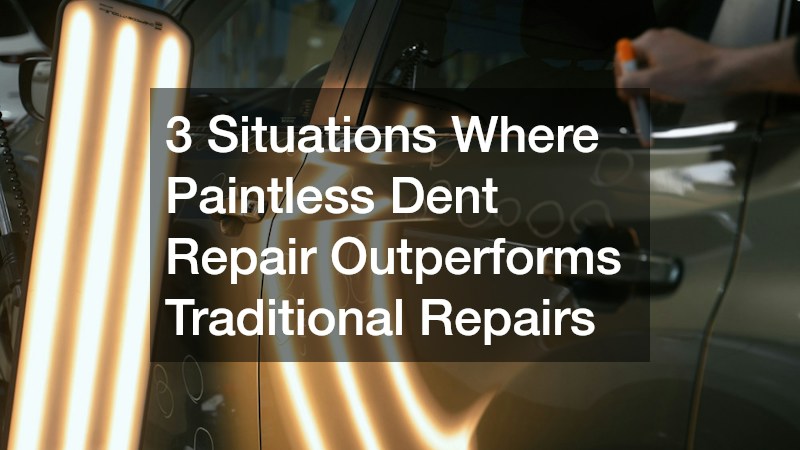
Vehicle dents and dings can affect a car's appearance and reduce its overall appeal, especially when they occur on highly visible body panels. Although traditional auto body repairs remain necessary for certain types of damage, some imperfections can be corrected without sanding, filling, or repainting the affected area. Paintless dent repairs offer an alternative that preserves the vehicle's original factory finish while restoring the damaged panel's shape. This technique uses specialized tools and carefully controlled pressure to massage dents out from behind the panel whenever possible.
Video Source
Understanding when this approach is most effective can help vehicle owners choose a repair method that saves time and maintains their automobile's appearance.
Door dings and small parking lot dents are common problems for vehicle owners. These imperfections often happen when another car door accidentally strikes a neighboring vehicle or a shopping cart bumps against a parked automobile. Although these dents may appear noticeable, they frequently leave the original paint undamaged. Traditional bodywork may involve sanding, applying body filler, priming, and repainting the affected section. This process can take additional time and may introduce unnecessary changes to an otherwise intact factory finish.
Paintless dent removal provides a practical solution when the damage meets the necessary conditions. Technicians use specialized rods, lights, and other equipment to identify the dent's contours and gradually restore the panel. Because the original paint remains intact, there is no need to match new paint to the surrounding areas. This can help preserve the vehicle's original appearance and reduce the possibility of visible color differences. The process is particularly beneficial for shallow dents located on accessible metal panels. However, deep creases, sharp indentations, or damaged paint may require a different repair approach.
Hailstorms can leave vehicles covered in numerous small dents across the hood, roof, trunk, and other exterior surfaces. Even relatively small hailstones can create noticeable imperfections when they strike a vehicle with enough force. Traditional repairs may require extensive bodywork and repainting, particularly when multiple panels are affected. Depending on the severity of the damage, this approach can involve considerable labor and extended repair times. Paintless dent removal can offer a more efficient alternative when the dents have not cracked or chipped the existing paint.
One significant advantage of this method is its ability to address multiple dents while preserving the original finish. Experienced technicians evaluate each affected panel and determine the best access points for specialized repair tools. They then apply controlled pressure to gradually return the metal to its original shape. Since the process does not require repainting, it can help maintain the vehicle's factory coating across large areas. This is particularly valuable for newer automobiles, where preserving original paint can support long-term appearance and resale appeal. Nevertheless, extensive hail damage should always be professionally assessed to determine whether paintless techniques are appropriate.
Shallow dents can develop from various everyday incidents, including minor impacts, accidental bumps, and contact with stationary objects. These imperfections may affect the appearance of doors, fenders, quarter panels, and other exterior sections. When the metal has not stretched significantly and the paint remains intact, paintless dent removal can restore the panel without requiring conventional bodywork. Traditional repairs may be more involved because technicians often need to reshape the damaged area, apply filler, and repaint the surface. For minor damage, these additional steps may be unnecessary.
Paintless dent removal focuses on carefully manipulating the damaged metal rather than covering the imperfection with additional materials. Technicians assess the dent's depth, location, and accessibility before selecting an appropriate repair technique. Depending on the panel's construction, they may work behind the damaged area or use specialized pulling equipment from the exterior. The gradual process helps restore the panel's original contours while keeping the existing paint intact. This approach can also reduce repair expenses and minimize the time a vehicle spends in the shop. However, dents with sharp creases, extensive stretching, or cracked paint may not qualify for this method.
Both repair methods serve important purposes, but paintless dent removal offers clear advantages when the damage is suitable for the process. By eliminating unnecessary sanding, fillers, and repainting, this technique provides a less invasive way to restore many common exterior imperfections. Understanding its capabilities and limitations allows vehicle owners to make informed decisions about maintaining their cars.