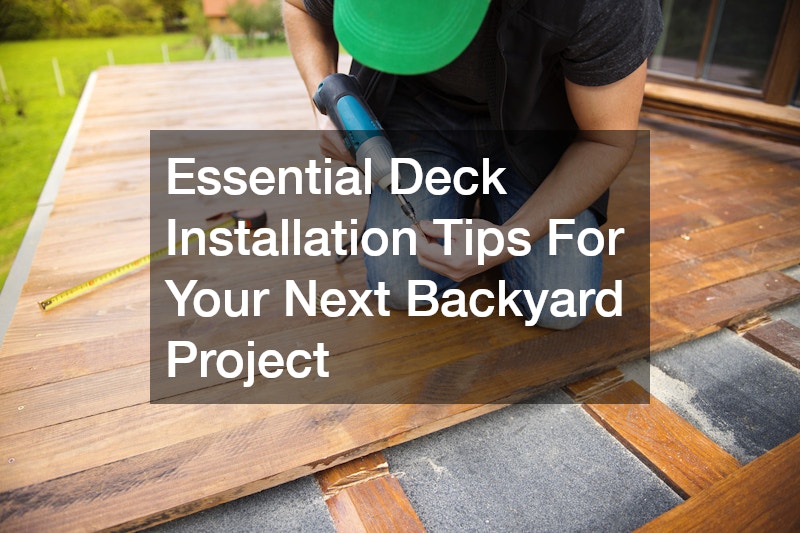
Creating the perfect deck for your backyard can transform your outdoor space into a haven for relaxation and entertainment. Whether you are a seasoned DIY enthusiast or a first-time builder, understanding the essentials of deck installation is crucial to ensuring the success of your project. This article provides you with key insights and tips to make sure your deck is both beautiful and long-lasting.
Video Source
Deciding between wood and composite decking materials is one of the most significant choices you'll make when planning your deck. Wood, such as cedar or pressure-treated pine, is a traditional choice that offers natural beauty and rustic charm. Composite materials, made from a mix of wood fibers and plastic, offer durability and low maintenance.
While wood can provide a more natural look, it requires regular maintenance, including staining and sealing, to preserve its appearance and prevent rot. Composite, on the other hand, is resistant to moisture and insects, making it a long-lasting option with less upkeep involved.
Ultimately, the decision will depend on your budget, aesthetic preferences, and how much maintenance you are willing to undertake. Both options can result in beautiful decks, but considering your long-term commitment to maintenance is crucial.
Durability is a key factor when selecting decking materials. Natural wood can last for many years if properly maintained, but it is susceptible to the effects of weather and pests. This can result in warping, splintering, and decay over time if not adequately cared for.
Composite materials are engineered to withstand the elements, offering a significant advantage in longevity. They are designed to resist fading, staining, and scratching, providing consistent aesthetics over time. This quality makes them particularly suitable for regions with harsh weather conditions.
Another material option is PVC decking, which is known for being lightweight and resistant to rot and mold. However, it generally offers less traction when wet compared to composite materials, which could be a consideration for safety in wetter climates.
The first step in planning your deck is to carefully measure your available yard space. Knowing the exact dimensions helps you design a deck that fits well within your landscape and complements your home. Start by marking out the intended deck area using stakes and strings.
Consider not only the horizontal space but also any vertical elements, such as railings or overhead structures that could impact the desired aesthetics. Be aware of any zoning laws or homeowner association rules that might limit the size or design of your deck.
Integrating the deck seamlessly with other outdoor features, such as gardens or pools, will enhance the overall usability and appearance of your backyard. These considerations are crucial for a cohesive design strategy that maximizes your outdoor living space.
Designing your deck involves balancing aesthetic appeal with practicality. You're not just looking at a visual enhancement; the deck should also serve functional needs. Whether you plan to entertain guests, relax in solitude, or create a family-playing area, define these needs early to guide your planning.
Explore design elements such as built-in seating, planters, or lighting to enhance both the function and beauty of your deck. Choose colors and textures that complement your home's exterior while adding interest and depth to your outdoor area.
Functionality also includes considerations like traffic flow, shade, and privacy. Incorporate features like pergolas or lattice for privacy and consider multiple levels or zones to facilitate different activities. Good design planning ensures that your deck remains versatile and enjoyable for years to come.
The foundation of a deck building project relies heavily on having the right tools. Essential hand tools include a reliable hammer, screwdrivers, and a quality tape measure. These are indispensable for basic tasks such as securing boards and measuring cuts.
Carpenter’s squares and levels are also vital for ensuring accuracy and that your deck remains true to your design specifications. These tools help maintain straight lines and perfect angles, which are critical for structural integrity and visual appeal.
Don't forget about saws for cutting wood or composite materials. A hand saw works for smaller cuts, but a miter saw or circular saw is recommended for more extensive projects, providing the precision needed for a professional finish.
Power tools can significantly expedite the deck installation process. A power drill or electric screwdriver is invaluable for securing boards quickly and efficiently. Look for ones with adjustable speeds to match the requirements of different materials.
A reciprocating saw is highly recommended for making quick cuts, particularly when you need to remove existing structures or make non-precise cuts. For larger, more precise cuts, a compound miter saw is ideal.
If you're dealing with dense wood or composite materials, a jigsaw can be highly effective for detailed cuts and curved designs. These power tools make the installation process quicker, easier, and more accurate, ensuring a professional-quality deck.
With careful planning, the right materials, and proper installation techniques, your backyard deck can become a lasting addition to enhance your outdoor living space. By following these essential tips, you can ensure that your deck not only serves as an attractive feature but also adds value to your home. Remember, attention to detail during the installation phase is key to achieving a durable and visually pleasing result.