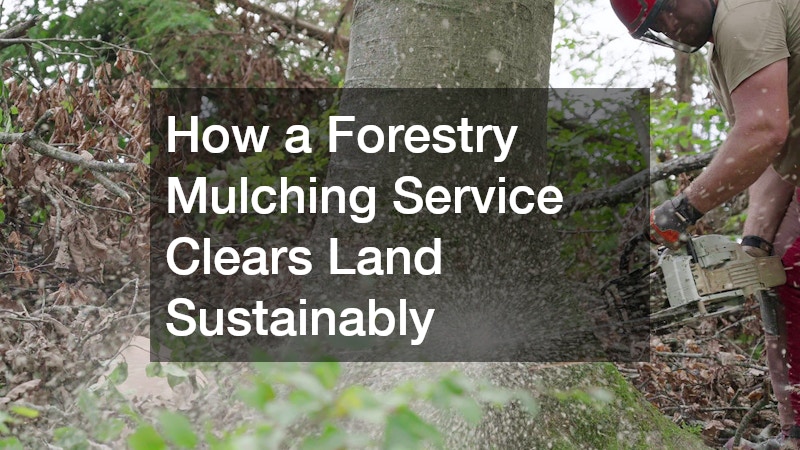
This article will explore the sustainable practices of forestry mulching services, detailing how they effectively clear land while minimizing environmental impact.
The concept of forestry mulching involves using specialized equipment to grind vegetation into mulch, which can then be left on-site. The machinery typically employs a rotating drum with sharp blades that efficiently shred trees, brush, and other plant materials.
Video Source
These mulching machines are capable of navigating through dense forests, allowing for effective land clearing without the need for traditional excavation methods.
The traditional methods of land clearing often involve heavy machinery that uproots and removes vegetation roots, leading to soil disruption. In contrast, forestry mulching machinery preserves the root systems while simultaneously reducing the biomass on the land. The process not only minimizes the environmental footprint but also supports a quick return to natural growth after the clearing process.
Forestry mulching can be particularly useful in various contexts, such as land development for residential or commercial projects, brush management for fire prevention, or habitat restoration for wildlife. By keeping the root systems intact and merely chopping the above-ground growth, forestry mulching ensures that the ecological balance of the area is maintained. This promotes a healthier environment and minimizes disturbances to local fauna and flora.
One of the most significant advantages of forestry mulching over traditional land clearing methods is its reduced environmental impact. By minimizing soil disturbance, forestry mulching helps maintain the soil structure and health, reducing erosion and enabling better water absorption. In turn, this promotes healthier plant growth and sustains biodiversity in the area.
Moreover, the mulch generated from the clearing process serves as organic matter that enriches the soil. As it decomposes, it contributes vital nutrients back into the earth, fostering an ecosystem that can support diverse vegetation. This aligns with sustainable practices that focus on maintaining or improving soil fertility rather than depleting it.
Additionally, forestry mulching is often a faster and more cost-effective method for clearing land. With advancements in machinery, the efficiency of the process has improved significantly, allowing for larger areas to be cleared in less time and with fewer resources. Compared to traditional methods that involve multiple steps and heavy equipment, forestry mulching offers a streamlined approach that can save time and money for landowners and developers.
Forestry mulching significantly enhances soil health in several key ways. When the mulch left behind breaks down, it adds organic matter to the soil, which is crucial for microbial life and overall soil fertility. The presence of this organic material aids in moisture retention and helps mitigate the effects of droughts in the affected areas.
Furthermore, the mulch helps prevent soil erosion, a common consequence of traditional clearing methods. By covering the soil surface, it protects against wind and water erosion, maintaining the integrity of the land. This erosion control is particularly important in areas with sloped terrains, where the removal of vegetation can lead to substantial degradation.
In addition to preventing erosion and enriching the soil, the mulching process can create a hospitable environment for beneficial insects and animals. Many soil organisms thrive in the organic matter created by mulch, which can assist in natural pest control and pollination. This intricate interplay between the soil, plants, and fauna supports a robust ecosystem that contributes to the sustainability of the surrounding area.
Despite the many benefits, forestry mulching is not without its limitations. One key consideration is that not all types of vegetation are suited for this method of clearing. Some dense, woody species may require additional treatment or follow-up management to ensure that regrowth does not occur excessively after mulching.
Moreover, while forestry mulching is effective for small to medium-sized land clearing projects, larger areas may require more extensive planning and the potential use of traditional methods in tandem. Coordination with environmental regulations is crucial to ensure compliance, especially in sensitive ecosystems where land clearing activities could pose risks to endangered species or habitats.
Lastly, the cost of acquiring forestry mulching services should also be weighed against the project budget. While it can be more cost-effective than traditional methods in many cases, factors such as site accessibility, the density of material to be removed, and the scale of the project can affect the overall expenses involved. A clear understanding of these considerations can help landowners make informed decisions regarding their land clearing needs.
To summarize, forestry mulching is a sustainable method for land clearing that offers numerous benefits, promoting healthier ecosystems and soil. By effectively reducing biomass and enriching the soil while minimizing disturbance, this practice aligns with modern environmental stewardship principles. Balancing the limitations and considerations of forestry mulching ensures that land development can proceed while maintaining and enhancing the natural environment.