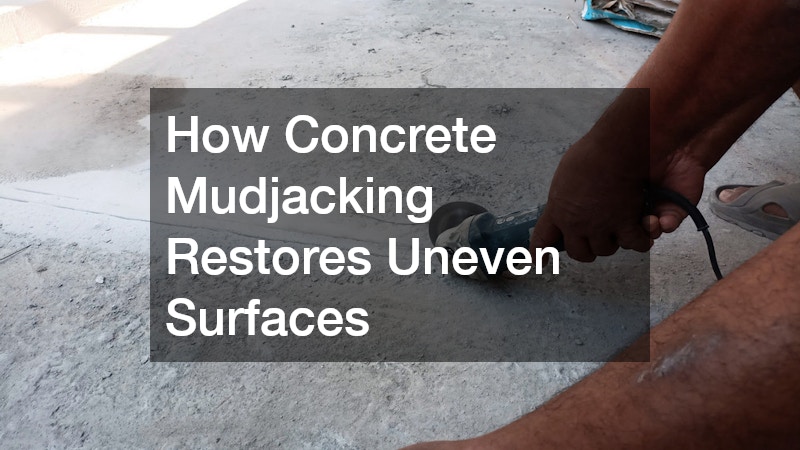
Concrete mudjacking is a cost-effective solution for repairing uneven concrete surfaces. This method has gained popularity among homeowners and property managers seeking efficient restoration techniques for sidewalks, driveways, patios, and floors. Unlike complete slab replacement, mudjacking allows for rapid repairs without the need for significant disruption to the surrounding areas.
Video Source
In this article, we will explore the intricacies of the mudjacking process, its benefits, the optimal conditions for its application, maintenance tips, and more.
Concrete mudjacking, also known as slabjacking, involves injecting a mixture of concrete and other materials beneath sunken slabs to lift them back to their original position. This process begins with the identification of the uneven areas and a thorough assessment of the underlying issues, such as soil erosion or inadequate compaction. Once these problem areas are determined, small holes are drilled into the slab, typically ranging from one-inch diameter holes, to provide access for the injection.
Next, a specialized mixture, commonly a blend of cement, soil, and additives, is prepared for injection. The consistency of the mixture is crucial as it needs to flow easily into the voids beneath the slab while still being sturdy enough to support the weight of the concrete above. Once injected, this mixture expands, effectively lifting the slab back into its correct position. Technicians can monitor the lifting process carefully to ensure that the surface is leveled correctly and that no damage occurs during this restoration.
Compared to complete slab replacement, mudjacking offers numerous advantages, including cost savings, reduced labor, and faster turnaround times for repairs. The financial aspect is often the most appealing; mudjacking can be significantly less expensive than replacing an entire slab of concrete. This cost-effectiveness can be particularly beneficial for large-scale projects or for homeowners operating on a budget.
Moreover, the labor involved in mudjacking is considerably less than that in replacement scenarios. Since the procedure does not require extensive demolition or removal of existing concrete, labor costs are minimized, and the overall project can be completed more swiftly. This efficiency is a major selling point, especially when dealing with commercial properties where downtime can translate into lost revenue.
Understanding when to use mudjacking is essential. Signs of uneven surfaces may include trip hazards, water pooling, and cracks in the concrete. If you notice these issues, it may indicate that the underlying soil has settled or eroded, creating a void beneath the concrete slab. Thus, assessing these indicators can help you determine whether mudjacking should be your first line of defense in repairing your uneven surfaces.
Another crucial factor to consider is the extent of damage to the concrete. If the cracks or voids are minor and the surface is otherwise structurally sound, mudjacking can effectively restore it without needing full replacement. Conversely, if the slabs are extensively damaged or compromised, replacement might be the only viable solution. Additionally, professionals can provide assessment and recommendations to determine the most suitable course of action based on the condition of the concrete and the specific environment.
The longevity of mudjacked surfaces is a common concern among property owners. Depending on various conditions, including the quality of materials used, the underlying soil conditions, and the amount of traffic the repaired slab will experience, mudjacking can last anywhere from a few years to decades. Typically, well-executed mudjacking can restore functionality and durability for a significant period of time, often outperforming temporary solutions.
Maintenance is key to prolonging the life of mudjacked surfaces. Regular monitoring for any signs of new settling or cracks is essential, especially after heavy rains or seismic events, as these can impact the underlying soil. Property owners may also consider periodic sealing of the concrete to minimize water intrusion and prevent further erosion of the soil beneath the slab.
It’s wise to work with professionals who can provide ongoing inspection and advice on maintenance strategies. Developing a relationship with a trusted concrete repair service can ensure any issues are addressed promptly and efficiently, keeping the property's surfaces in good repair for years to come.
Concrete mudjacking presents a practical and efficient method to restore uneven surfaces, with many benefits over traditional methods. Not only does it offer cost savings and quick repairs, but it also minimizes disruption and is environmentally friendly. By understanding its process and applications, property owners can make informed decisions to maintain their properties effectively. With this knowledge, you can ensure long-lasting safety and appeal for any concrete surface in your home or business.