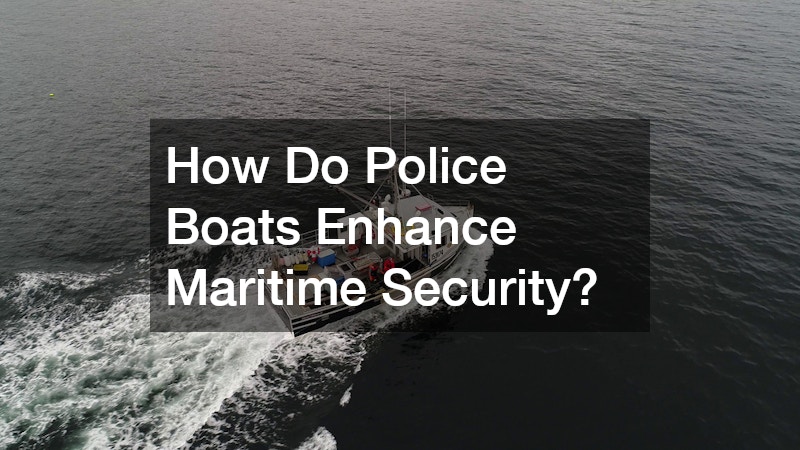
In an increasingly interconnected world where maritime activities are pivotal, ensuring security on the water is paramount. Police boats play a vital role in enhancing maritime security by enforcing laws, preventing crimes, and ensuring safe navigation. This article will explore the importance, functionality, and impact of police boats in maritime security.
Video Source
Police boats engage in routine patrolling and surveillance of coastal areas to deter and detect illegal activities such as smuggling and illegal fishing. Their presence serves as a deterrent to those contemplating such activities. Constant vigilance and monitoring by police boats help maintain law and order in potential crime hotspots.
Modern surveillance technologies aboard police boats, such as night vision and long-range cameras, enable them to detect activities concealed by the cover of darkness or distance. Regular patrols not only deter crime but also showcase the agility and capability of police boats.
Through high-speed pursuits and strategic maneuvers, police boats are equipped to intercept and apprehend vessels involved in unlawful activities. The agility and speed of police boats are crucial in quick intercept missions. This enables law enforcement to effectively curtail criminal pursuits in real-time.
The design and technology of police boats ensure that they can approach suspects discreetly. Utilizing radar and sonar guides them in pursuit and gives them an upper hand in positioning. Capture and evidence collection onboard help in prosecution, further securing criminal justice.
Joint operations and sharing intelligence with other agencies enhance the effectiveness of police boats in combating cross-border maritime offenses. Global maritime threats often require combined efforts to address due to their intricate nature. Inter-agency collaborations are key in pooling resources for a more wide-ranging reach.
Police boats work alongside the coast guard, customs, and international agencies to counteract expansive criminal networks. Sharing of intelligence ensures a proactive response to emerging threats.
Police boats assist in navigating busy waterways, ensuring vessels adhere to regulations, thus reducing accidents and congestion. Their insights and directives aid recreational and commercial vessels in following safe passage routes.
With advanced radar and tracking systems, police boats monitor vessel traffic flow efficiently in congested areas. This helps authorities optimize navigational routes and reduce the interaction risk among vessels.
Equipped with advanced technology, police boats are instrumental in executing search and rescue missions effectively. Time is critical during emergencies, and police boats are equipped with lifesaving equipment to provide immediate assistance.
Their ability to maneuver through challenging weather conditions and turbulent waters is an asset. This means they can operate when conditions have hampered other vessels or rescue methodologies.
In cases of maritime emergencies, police boats provide critical first-response services to prevent escalation of incidents. Their emergency response training equips crews to handle diverse scenarios.
Coordination among teams is facilitated through advanced communication systems that offer real-time data sharing. By leveraging modern crisis management protocols, they provide essential evaluations and updates to decision-makers.
The use of cutting-edge communication tools allows for seamless coordination among law enforcement units and other vessels. These systems facilitate uninterrupted and clear communication, essential for successful operations.
VHF radios, satellite communications, and GPS tracking are integral tools. They strengthen engagements and interactions for coordinated law enforcement efforts.
Radar, sonar, and thermal imaging technologies enhance the capability of police boats to monitor and secure maritime environments. These tools help in identifying potential threats that could pose a risk to maritime security.
Sonar systems provide insight into submarine environments, helping to track underwater activities. The integration of thermal imaging cameras enables detection in low-visibility conditions.
The deployment of unmanned aerial and underwater vehicles expands the operational reach and surveillance capacity of police boats. These innovative technological tools have transformed traditional surveillance methods.
Drones can access hard-to-reach areas quickly and provide live data back to command centers. Underwater vehicles offer visual and exploration capabilities for submerged environments.
Police boats are integral to maintaining maritime security by preventing crime, ensuring safety, and adapting to technological advancements. As maritime activities grow, so does the need for effective maritime security measures, with police boats at the forefront.