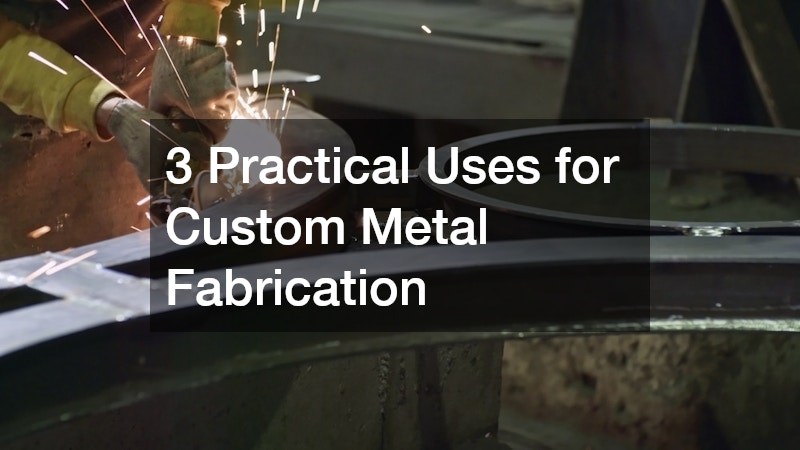
Custom solutions play a critical role in modern construction, manufacturing, and design. When off-the-shelf components fall short, tailored metalwork provides the strength, precision, and flexibility that complex projects demand. From structural frameworks to decorative architectural details, metal fabrication allows businesses and property owners to achieve results that standard materials simply cannot deliver.
One of the most common and essential uses for industrial fabrication is in structural construction. Commercial buildings, industrial facilities, and even residential properties rely on custom-fabricated steel and aluminum components to ensure stability and compliance with engineering standards.
Video Source
Beams, columns, brackets, and support frames are often designed to meet precise load requirements that vary by project.
Unlike mass-produced parts, custom structural components are engineered to fit exact measurements and site conditions. This reduces the need for field modifications, minimizes installation delays, and enhances overall safety. Contractors benefit from improved accuracy during assembly, while engineers gain confidence that every element meets specified tolerances.
In renovation and retrofit projects, customized metalwork becomes even more valuable. Older buildings may have irregular dimensions or unique architectural features that require nonstandard supports. Custom fabrication ensures seamless integration with existing materials, preserving structural integrity without compromising design intent.
Beyond strength and fit, durability is another key advantage. Fabricated steel components can be treated with galvanization, powder coating, or specialized finishes to resist corrosion and environmental wear. This is particularly important in regions with high humidity, coastal exposure, or temperature fluctuations. When structural elements are built to withstand these conditions, long-term maintenance costs decrease, and performance improves.
Manufacturing environments demand equipment that aligns precisely with operational workflows. Custom machine guards, platforms, enclosures, and material handling systems are frequently developed through metal fabrication to support productivity and worker safety.
Standard equipment rarely accounts for every spatial constraint or production requirement. By contrast, fabricated components are designed around the specific machinery, layout, and throughput goals of a facility. This level of customization allows businesses to optimize floor space, improve ergonomics, and maintain compliance with safety regulations.
For example, access platforms and mezzanines can be built to accommodate heavy equipment while maintaining safe walkways and guardrails. Similarly, custom brackets and mounts secure specialized tools or automated systems in place, reducing vibration and extending equipment lifespan. In high-volume operations, even small efficiency improvements can translate into measurable cost savings over time.
Industrial environments also expose materials to harsh conditions such as extreme heat, chemical contact, and repetitive mechanical stress. Fabricators select alloys and finishing techniques based on these factors, ensuring that each component performs reliably under pressure. Stainless steel may be chosen for sanitary applications in food processing, while reinforced carbon steel may be preferred for heavy-duty manufacturing.
Repair and replacement work is another practical application. When a legacy machine part is no longer available from the original manufacturer, custom fabrication offers a viable solution. Skilled technicians can replicate or enhance the original design, restoring functionality without requiring a full system replacement. This approach extends the service life of valuable equipment and prevents costly downtime.
While structural and industrial applications emphasize function, architectural uses showcase the aesthetic versatility of custom metalwork. Designers increasingly incorporate fabricated metal elements into residential and commercial spaces to create a distinctive visual impact.
Stair railings, balcony systems, gates, pergolas, and decorative panels can all be tailored to complement a specific architectural style. Whether the goal is a modern industrial look or a more ornate, traditional appearance, fabricated components provide design freedom that prefabricated products cannot match.
Customization allows precise control over dimensions, patterns, and finishes. Laser cutting technology enables intricate detailing, while welding and forming techniques shape metal into curves and angles that align with a building's design concept. Finishes such as brushed steel, matte black powder coating, or weathered patina further enhance visual appeal.
Beyond aesthetics, durability remains a defining advantage. Exterior architectural features must withstand weather exposure, UV radiation, and physical wear. Properly treated metal components resist rust and structural degradation, maintaining both appearance and performance over time. This makes them particularly well-suited for entry gates, fencing, and facade accents.
Custom metal solutions offer far more than simple material shaping. Through precise engineering and tailored design, metal fabrication supports structural integrity, industrial efficiency, and architectural creativity. Whether reinforcing a commercial building, optimizing a production facility, or elevating a property's visual appeal, customized fabrication delivers performance and longevity that standardized components often cannot achieve.