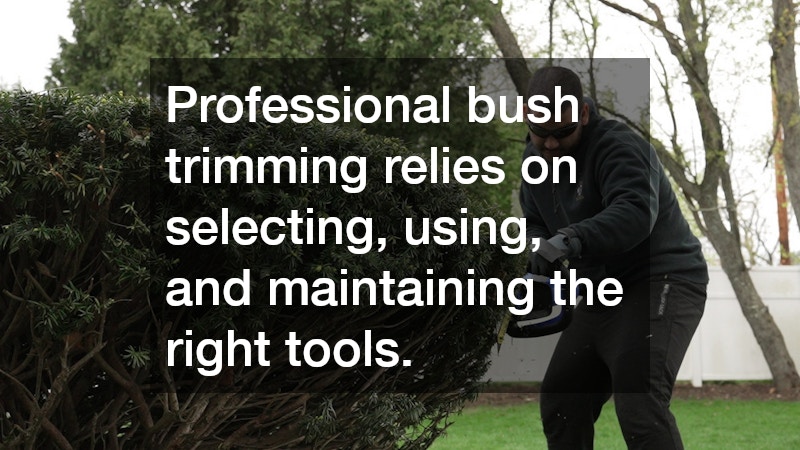
Using the right tools in bush trimming enhances efficiency and quality. This guide explores the essential tools required for professional bush trimming services, informed by common questions from both enthusiasts and professionals. Properly selected equipment saves time, protects plant health, and ensures precise results.
Video Source
Understanding tool types, maintenance, and usage techniques empowers users to complete projects safely and effectively.
Pruners and loppers are foundational tools. Pruners, or hand secateurs, are ideal for small branches, providing precise cuts that promote healthy growth. Loppers, with longer handles, cut thicker branches, offering leverage for larger tasks. High-quality models feature high-carbon steel blades, ergonomic handles, and replaceable parts. Regular cleaning, oiling, and sharpening maintain cutting efficiency and prevent plant disease spread. Properly maintained pruners and loppers are indispensable for professional bush trimming.
Hedge trimmers improve speed and uniformity, especially over large areas. Electric models are lighter and quieter, cordless options offer mobility, and gas-powered units provide heavy-duty performance. Dual-action blades reduce vibration, while adjustable blade angles accommodate varied shapes. Regular maintenance, including cleaning blades, lubricating moving parts, and monitoring power sources, ensures consistent performance. Safe storage protects tools from moisture and damage.
Protective eyewear, gloves, helmets, and non-slip footwear are essential. Ear protection is necessary for noisy equipment, and long clothing prevents skin irritation. Tool belts or harnesses enhance workflow by keeping tools accessible. Safe handling, adherence to manufacturer instructions, and a clean workspace reduce risks. A first-aid kit and regular safety training further protect operators.
Bush types differ in growth and trimming needs. Evergreens require frequent shaping, while flowering shrubs benefit from seasonal pruning. Observing size, shape, and growth cycles helps select suitable tools. Adjustable pruners or loppers allow precise cuts for specific plants, promoting health and aesthetic appeal. Fast-growing bushes require more frequent attention and flexible equipment to accommodate their development.
Tools with extendable handles or interchangeable blades adapt to diverse trimming tasks. Telescopic handles reach high or tight areas without ladders, and adjustable blades prevent overcutting. Versatile tools reduce the number of separate tools required and improve efficiency. For formal gardens, topiary, or uniform hedges, adjustable tools maintain precision and consistency while supporting professional standards.
Battery-powered hedge trimmers and chainsaws combine mobility, reduced noise, and environmental responsibility. Modern batteries provide adequate power for medium-duty tasks, require less maintenance than gas models, and comply with local restrictions on emissions. While initial costs are higher, long-term savings and sustainability benefits make these tools attractive for eco-conscious professionals. Proper charging, storage, and recycling maximize lifespan and minimize environmental impact.
Clean tools after each use to remove sap, dirt, and residues. Sharpen blades periodically to maintain precision and reduce effort. Blunt tools damage plants, increase operator fatigue, and elevate disease risk. Implementing a maintenance schedule, including inspections for rust, wear, and handle integrity, ensures reliable performance and safety. Well-maintained tools enhance efficiency, prolong life, and reduce costs.
Store tools in dry, temperature-controlled spaces using pegboards, cabinets, or racks. Protective covers prevent dust and accidental cuts. Labeling and categorization improve accessibility and workflow. Portable toolboxes can safeguard tools during transportation. Regular checks for damage or pests maintain operational readiness. Organized storage complements maintenance routines and protects investments.
Replace tools exhibiting persistent dullness, bent blades, cracked handles, or misaligned components. Overused tools compromise precision and increase injury risk. New models offer improved ergonomics, energy efficiency, and safety. Evaluating repair versus replacement ensures optimal performance, cost-effectiveness, and client satisfaction. Timely updates maintain professional standards and operational readiness.
Professional bush trimming relies on selecting, using, and maintaining the right tools. Hand tools, power tools, safety gear, adjustable implements, and eco-friendly options form the backbone of efficient and effective trimming. Regular maintenance, proper storage, and timely replacement preserve tool performance and safety. Investing in quality tools and following best practices improves results, protects plants, and enhances productivity. These strategies support professional standards, client satisfaction, and sustainable landscaping practices.