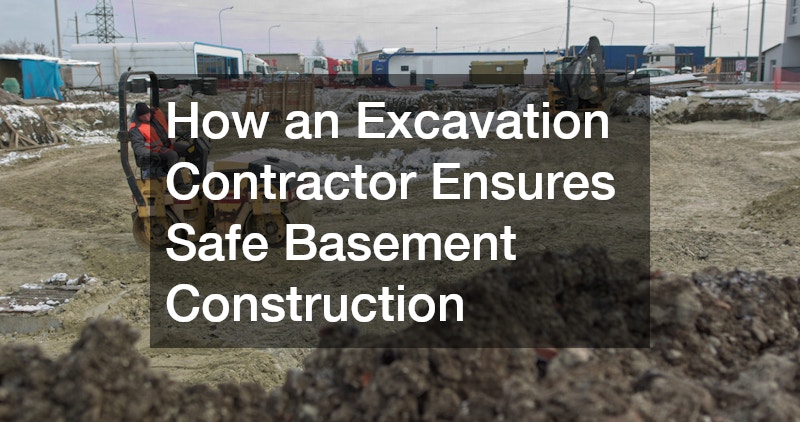
Constructing a safe and durable basement is a complex process that requires careful planning, technical expertise, and strict adherence to safety standards. From soil evaluation to structural reinforcement, every phase must be executed with precision to protect both the home and its occupants. Working with an experienced excavation contractor plays a critical role in ensuring that the foundation is properly prepared and that potential risks are addressed before construction begins. Understanding how professionals approach basement excavation can help homeowners appreciate the level of detail required for a successful outcome.
Before any digging begins, a thorough site evaluation is essential to determine the feasibility of basement construction. This process involves assessing soil composition, drainage conditions, and the overall stability of the land.
Video Source
Different soil types react differently to excavation, with clay expanding under moisture and sandy soils shifting more easily. Identifying these characteristics allows contractors to develop a strategy that minimizes the risk of collapse or water intrusion.
A professional excavator will also conduct grading assessments to ensure proper water runoff. Poor drainage can lead to hydrostatic pressure against basement walls, increasing the likelihood of cracks or leaks over time. By analyzing slope and elevation, contractors can design solutions such as swales or drainage systems that direct water away from the foundation.
In addition to soil and drainage considerations, underground utilities must be located and marked. Striking a gas line or electrical conduit can create dangerous situations and costly delays. Contractors coordinate with local utility services to ensure all lines are identified before excavation begins, maintaining both safety and compliance with regulations.
Once the site has been evaluated, the excavation process begins with careful attention to depth, width, and structural integrity. Excavating for a basement requires precise measurements to accommodate the foundation while maintaining safe working conditions. Over-excavation can weaken surrounding soil, while under-excavation can lead to improper foundation placement.
During this phase, an excavation contractor uses specialized equipment to remove soil efficiently while maintaining control over the excavation area. Techniques such as benching or sloping may be used to prevent cave-ins, especially in areas with less stable soil. In tighter spaces, shoring systems are often installed to support the excavation walls and protect workers.
Proper structural support is critical as the excavation progresses. Temporary reinforcements ensure that the surrounding earth remains stable until permanent foundation elements are installed. This step is particularly important in residential areas where nearby structures could be affected by shifting soil.
Accuracy is also essential when preparing the base for the foundation. The bottom of the excavation must be level and compacted to provide a solid footing. Any inconsistencies at this stage can compromise the entire structure, leading to uneven settling or long-term damage. By maintaining strict quality control, contractors help ensure that the basement foundation is built on a stable and reliable base.
Water management is one of the most important aspects of basement construction. Without proper drainage and waterproofing, even a well-built basement can develop moisture issues over time. Addressing these concerns during the excavation phase helps prevent costly repairs in the future.
An effective drainage system typically includes footing drains installed around the perimeter of the foundation. These drains collect groundwater and direct it away from the structure, reducing pressure on basement walls. In some cases, sump pumps may be added to manage excess water and provide an additional layer of protection.
Waterproofing techniques are applied to the exterior of the foundation walls before backfilling begins. These may include membranes, coatings, or drainage boards that create a barrier against moisture infiltration. The choice of materials depends on soil conditions and the level of water exposure expected at the site.
Safe basement construction requires a coordinated effort that combines technical expertise, careful planning, and attention to detail at every stage. From initial site evaluation to final backfilling, each step plays a role in ensuring that the foundation is strong, stable, and protected from environmental factors. Partnering with a qualified excavation contractor provides the knowledge and experience needed to navigate these complexities with confidence. By prioritizing safety, precision, and proper water management, homeowners can invest in a basement that enhances both the functionality and long-term value of their property.