Modern construction relies heavily on precision, efficiency, and durability, and few systems reflect these priorities better than steel buildings. These structures are widely used across commercial, industrial, and institutional projects because they offer strength, flexibility in design, and long-term performance. However, what often goes unnoticed is the highly coordinated process required to bring them from concept to completion. From early planning stages through final assembly, each phase is carefully engineered to ensure structural integrity and functional efficiency. Understanding this process helps clarify why these structures remain a preferred solution in large-scale development.
Video Source
The construction journey begins long before any physical materials arrive on site. During the design and engineering phase, architects and structural engineers collaborate to translate project requirements into detailed technical drawings. These plans account for building use, environmental conditions, load requirements, and local building codes. Every beam, column, and connection point is calculated with precision to ensure stability and safety.
Advanced modeling software plays a critical role in this stage, allowing teams to simulate stress points and refine structural performance before fabrication begins. This reduces the likelihood of errors and ensures that the final structure will perform as expected under real-world conditions. Engineers also coordinate closely with mechanical, electrical, and plumbing systems to ensure seamless integration within the framework.
Material specifications are finalized during this phase as well. The grade of steel, protective coatings, and connection methods are all determined based on durability requirements and environmental exposure. Once approved, these plans serve as the blueprint for the entire project, guiding every subsequent step with exacting detail.
Once the initial design phase is complete, production shifts to the fabrication facility, where components are manufactured with industrial precision. This stage is where steel buildings begin to take physical form. Raw steel is cut, shaped, welded, and drilled according to the specifications outlined in the engineering drawings. Automated machinery is often used to ensure accuracy and consistency across all components.
Quality control is a central focus throughout fabrication. Each piece is inspected for dimensional accuracy, weld integrity, and surface treatment compliance. Protective coatings, such as galvanization or specialized primers, are applied to prevent corrosion and extend the lifespan of the structure. These treatments are especially important for buildings exposed to harsh weather conditions or industrial environments.
After fabrication, components are labeled and organized for shipment to the construction site. This systematic approach ensures that assembly crews can efficiently identify and install each piece in the correct sequence. By the time the materials leave the factory, all of the elements have been verified for compliance with the original design specifications, minimizing delays during installation.
With materials delivered to the site, the focus shifts to physical construction. The erection phase begins with site preparation, including grading, foundation work, and anchor bolt placement. A properly constructed foundation is essential, as it provides the stability needed to support the entire structure. Once the foundation has cured and been inspected, assembly can begin.
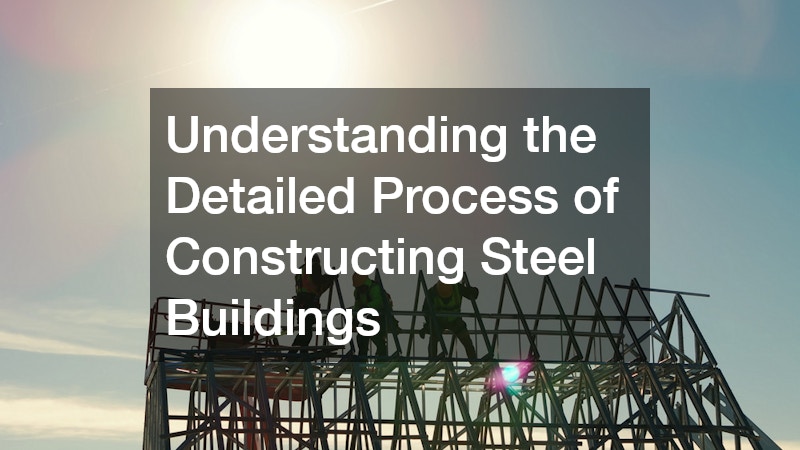
Steel columns are typically the first structural elements to be installed. These are anchored to the foundation and temporarily braced to maintain alignment. From there, beams and secondary framing members are lifted into place using cranes and secured according to the engineering plan. The process continues systematically, with each section reinforcing the next until the full structural skeleton is complete.
As the frame takes shape, additional components such as wall panels, roof systems, insulation, and exterior finishes are installed. Coordination between trades is critical during this stage to ensure alignment between structural and architectural elements. Precision and sequencing are key, as even minor deviations can affect the integrity of the finished structure.
The construction of modern steel buildings is a highly structured process that combines engineering expertise, manufacturing precision, and skilled on-site execution. Each phase, from initial design through final assembly, plays a crucial role in ensuring durability, safety, and performance. When properly planned and executed, these structures deliver long-term value and adaptability across a wide range of applications. The result is a building system that continues to meet the demands of contemporary construction with efficiency and reliability. This level of coordination ultimately ensures that each project is completed with consistency, efficiency, and long-term structural dependability.